Your Progress
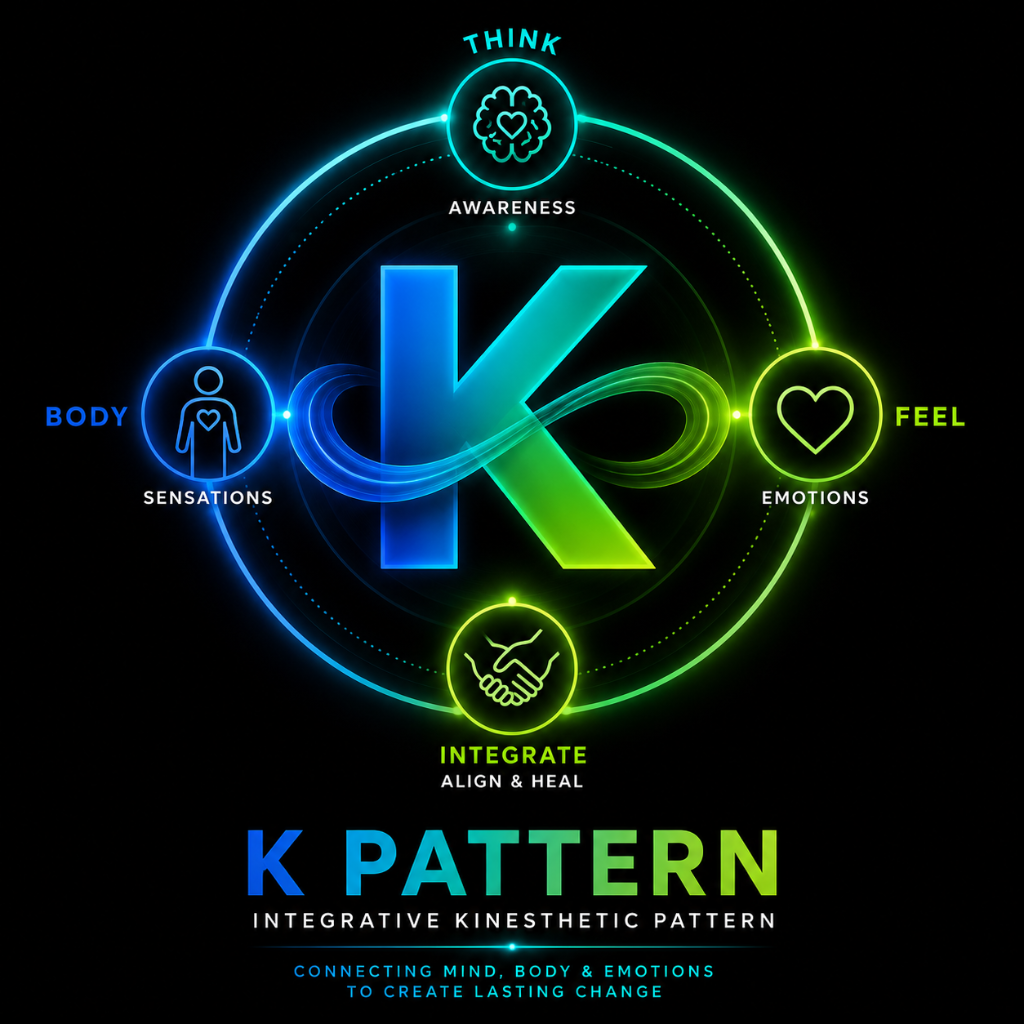
(K) Pattern — Integrative Kinaesthetic Pattern
Understanding Emotional Memory Imprinting
IEMT works on the memory imprints that activate emotions and feelings. A negative emotional imprint occurs when a person has a new kinesthetic response to an experience or event that may be physically or emotionally intense. This teaches the person's brain how to feel about and respond to future situations. The amygdala fires off the flight, fight or freeze response.
How the Brain Protects Us
Our brains like to conserve energy and are wired to protect us. When we have a traumatic or negatively charged event, an imprint is formed so that the brain can easily access and quickly identify any perceived threat. This automatic response system can stack onto future events to trigger unwanted emotions, even if the circumstances are not exactly the same as the original imprinting experience.
Key Insight
Example: Your boss calls you into the office because he would "like a word." You immediately have an automatic response as though you were a kid in school being called in by the principal or teacher. This is an emotional imprint.
The Fundamental Question
We ask the question:
Key Insight
"How did this person learn to feel this way about this thing?"
How IEMT Changes This
With IEMT we are able to reduce or eliminate the impact of these imprinting experiences so that the emotional and physical effects happening now can be downgraded. The memories can become consolidated, and the associated emotions regulated, hence the effects are diminished in real time. Importantly, clients are usually aware right then and there of somatic changes as well as changes in the memory quality, making the component more difficult to recreate in a way that can cause emotional upset.
The K-Pattern Protocol
The K-Pattern is the core emotional processing protocol in IEMT. It targets the felt (kinaesthetic) sense of an emotional imprint and uses directed eye movements to de-potentiate it.
When to Use the K-Pattern
Use the K-Pattern when the client presents with:
- A recurring unwanted emotion
- A body-held feeling associated with a memory or situation
- An emotional pattern that feels automatic or out of control
- Anticipatory events
1. ASK: "Do you have a feeling thats a problem?"
2. "What would you rate intensity on a scale of 0–10." (Here they will associate into it)
*(This could also be a feeling already rated from a memory that didn't lower)
3. Ask the client: "AND How familiar is this feeling?"
(Transderivational search: In NLP and hypnosis contexts, it refers to the unconscious internal process of searching through memories, meanings, and experiences to make sense of language or experience.)
4. ASK: "AND When is the first time you remember feeling this way? mind you may not be the first time but the first time you can remember now? "
5. ASK: "AND How vivid is this memory?"
(Notice Where they access)
6. Move the eyes starting at the noticed location, moving away from there hit all accesses.
"Stating "hold on to that memory, keep holding that memory... should anything else come up just notice ... keep holding that memory.."
7. Recalibrate
"And when you think of that memory now...what do you notice?"
"What would you rate the feeling now?"
8. Repeat if required with new rating
Common Responses to Watch For
As you work through the K-Pattern, watch for these responses:
- Intensity decreasing steadily with each pass
- Location of the feeling shifting in the body
- The feeling changing quality before resolving
- Insight, Logic, Wisdom
Key Principles:
• Efficiency: Limit movements to 20 seconds (40 max)—excessive duration (e.g., 5 minutes) risks nausea, dizziness, or disengagement without benefit. • Deviation as Change Marker: No deviation means no processing—switch axes. Deviations signal dissociation (blurring, distancing) or switching (new memory). • Flooding: Rapid deviations across axes, especially lower quadrants, may trigger flooding—a kaleidoscope of images with somatic responses (e.g., tremors, sweating). Allow this to self-resolve. • Timing: Begin movements as the client focuses—delays allow distraction, reducing impact.The calibration eye movements are calibrated specifically to the axis deviations that are observed. With each axis deviation, the practitioners mark the occurrence with a rhetorical question: “Wow, what happened there... oh, there again... and, and there's another one...” Axis deviations occur when there is a change in the mental representation.
FOR AN ANTICIPATORY EVENT:
This could be a job interview, thinking about not be able to have a drink, sexual issues, flying, seeing someone, etc.
Elicit Anticipatory event
Anticipatory event
Ask them to think about the event, then elicit the emotion. Ask them, “when you think of the event, out of 10 how strong is the emotion?” You may have to search the emotion out..if so do this.. Example: If client says “I want more confidence“ this isn’t an emotion… Ask what would you be doing if you had more Confidence? And what’s the lack of confidence stopping you from doing? Client: “If I had confidence I would go for that job promotion… ASK.. So when you think about that job promotion whats it like? Client: “I feel vulnerable“ Do (K) PATTERN of the feeling of Vulnerable..
RECALIBRATE:
When you think of that memory now whats it like? And When you think of the feeling now whats it like? And When you think of that event/thing now whats it like.
REPEAT IF REQUIRED
REVIEW
1. Identify State (do you have a negative feeling)
2. "And how strong is this feeling out of ten.?"
3. "And how familiar is this feeling?"
4. "And when is the first time you can remember feeling this feeling..may not be the first time but
the first time you can remember now?
5. "And how vivid is this memory?" (Notice where they access the memory start eye movements
there)
6. Do Eye Movements until smooth
(keep holding that memory.. should anything else come up just allow it to do so Or just notice let them come and go
7. "And what happens when you think about that memory now?"
"What happens when you think of that feeling now?"
(Repeat eye movements if memory is still vivid) or (Emotional rating is above)
"What happens when you think of that feeling now?" (Repeat EM on new emotion or level)
Unlike The Basic, we are looking for deviations or blips. This indicates
that the internal representation is changing. Once one axis is smooth, change to the next one. Do this until all the axes are clear or for about 30-40 seconds
Here we are looking for those eye deviation, this little blips as you notice them you can comment on them.
Say things like “whats that there” or “something came up there” etc.
Keep in mind that you looking for these deviations which means something
has changed.
Guided Reflection
1.What is the main purpose of the K-Pattern in IEMT?
2.Which client presentation is appropriate for using the K-Pattern?
3.What question helps the practitioner begin finding the emotional imprint behind the feeling?
4.After asking the client to rate the intensity of the feeling, what does the practitioner ask next in the K-Pattern sequence?
5.When the client accesses the first remembered time of the feeling, what should the practitioner notice before starting eye movements?
6.What do eye deviations or blips indicate during the K-Pattern?
7.What should the practitioner do if there is no deviation during an eye movement axis?
8.For an anticipatory event, what should the practitioner elicit before applying the K-Pattern?
9.What is a key safety principle about the length of eye movements in the K-Pattern?
10.Which recalibration question is used after eye movements in the K-Pattern review?
Answer all questions to submit