Your Progress
Memory Encoding / Neurology
Eye Movement and Memory
Studies on PTSD have shown a link between the eye movements in REM sleep and eye movements during eye movement techniques. The implication is that, like REM sleep, eye movements facilitate the transfer of episodic memory (this includes emotions, physical sensations and beliefs associated with an event) into semantic memory networks during which the meaning/understanding of the event is extracted and negative associations are no longer present. The eyes have 6 muscles and 3 nerves. The proximal aspects of the trochlear nerve may have interest in the limbic system.
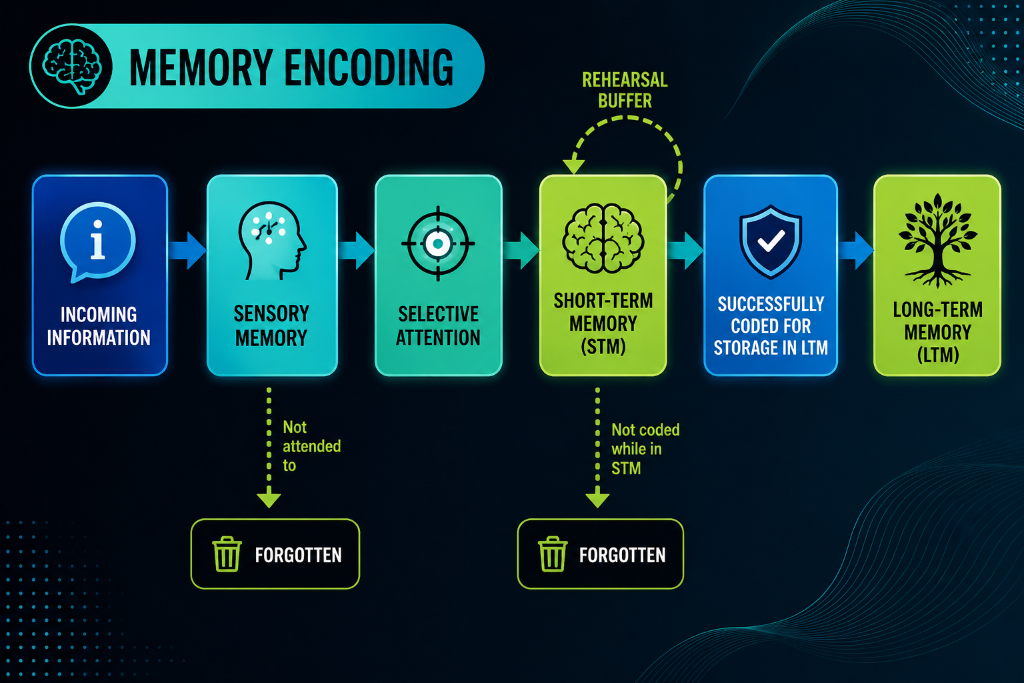
Memory Encoding
Where Do Memories Live?
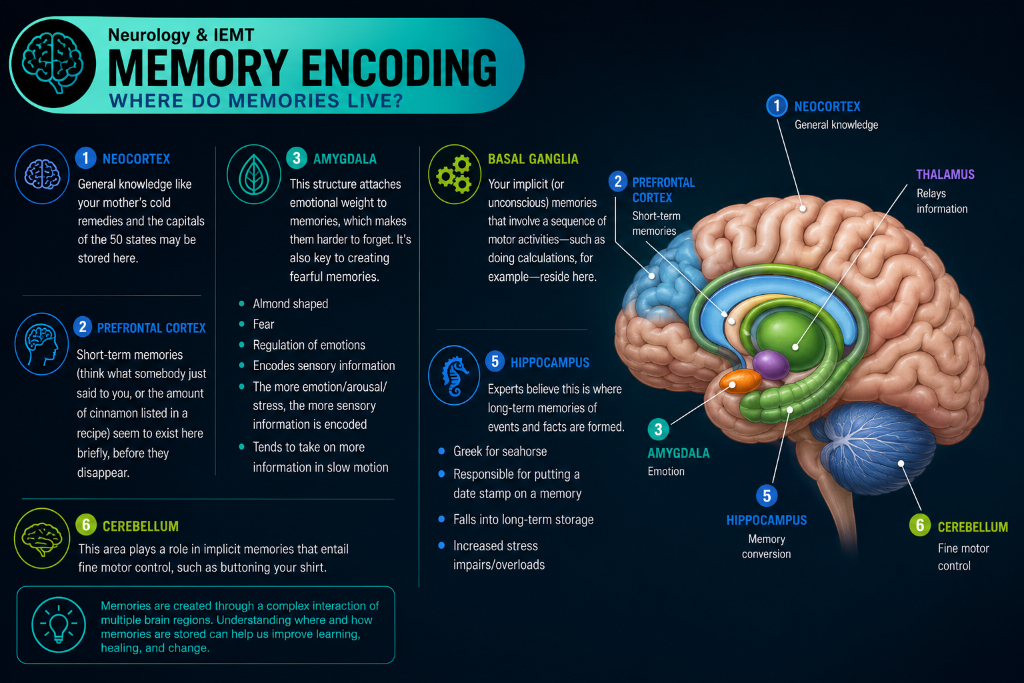
1. Neocortex
General knowledge like your mother's cold remedies and the capitals of the 50 states may be stored here.
2. Prefrontal Cortex
Short-term memories (think what somebody just said to you, or the amount of cinnamon listed in a recipe) seem to exist here briefly before they disappear.
3. Amygdala
This structure attaches emotional weight to memories, which makes them harder to forget. It is also key to creating fearful memories.
- Almond shaped
- Fear
- Regulation of emotions
- Encodes sensory information
- The more emotion/arousal/stress, the more sensory information is encoded
- Tends to take on more information in slow motion
4. Basal Ganglia
Your implicit (or unconscious) memories that involve a sequence of motor activities, such as doing calculations, for example, reside here.
5. Hippocampus
Experts believe this is where long-term memories of events and facts are formed.
- Greek for seahorse
- Responsible for putting a date stamp on a memory
- Falls into long-term storage
- Increased stress impairs/overloads
6. Cerebellum
This area plays a role in implicit memories that entail fine motor control, such as buttoning your shirt.
Guided Reflection
1.What brain structure attaches emotional weight to memories and is key to creating fearful memories?
2.What is the hippocampus primarily responsible for in memory encoding?
3.What do studies on PTSD suggest about eye movements and REM sleep?
4.Where does the brain store general knowledge such as the capitals of countries?
5.What does the amygdala tend to do differently when encoding high-stress experiences?
Answer all questions to submit